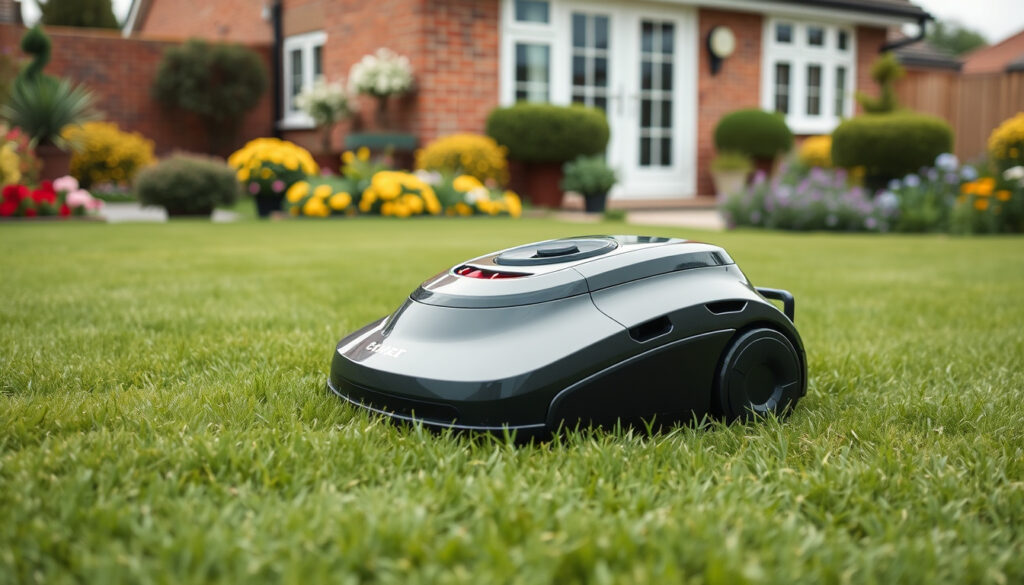
Best Robot Lawn Mower UK: 2026 Guide & Reviews
The weekend battle with the lawn mower might already feel like a losing one for British homeowners, given the wet grass, uneven patches, and sheer time it takes. A robot lawn mower can look like a clever escape, but with prices from a few hundred pounds to over two thousand, the right choice depends on your climate, lawn size, and how much you value convenience over control.
Price range in UK: £500 – £3,000 · Average battery life: 60–120 minutes · Number of leading brands: 20+ (including Husqvarna, Flymo, Worx) · Typical cutting area per charge: 0.1–0.5 acres
Quick snapshot
- Husqvarna Automower 450X – handles up to 0.5 acres, GPS navigation, £2,500 (Husqvarna UK (official site))
- Worx Landroid L – up to 0.25 acres, simple installation, £600 (Worx UK (official site))
- Flymo GO 500 – no perimeter wire needed, smartphone control, £800 (Flymo UK (official site))
- Gardena R40Li – water-resistant design, good traction, £1,200 (Gardena UK (official site))
| Specification | Value |
|---|---|
| UK market size (units sold annually) | Over 50,000 (estimated) |
| Average price | £1,200 |
| Most popular brand | Husqvarna |
| Average installation time | 1–3 hours |
| Warranty typical | 2 years |
What is the best robot lawn mower in the UK?
Finding the single best model depends on your garden size, budget, and how much you value advanced features like GPS or wire-free operation. The UK market offers strong contenders at every price point. Which? (consumer testing authority) tests robot mowers on long grass, rough grass, damp grass, and standard lawns, making their evaluations especially relevant for British conditions.
Top models for 2026
- Husqvarna Automower 450X – GPS-assisted, handles up to 0.5 acres, priced around £2,500 (Husqvarna UK)
- Flymo GO 500 – perimeter wire-free, smartphone controlled, £800 (Flymo UK)
- Worx Landroid L – budget-friendly, simple installation, about £600 (Worx UK)
- LawnMaster OcuMow 18 MX – named best overall in The Independent’s 2025 test roundup at £499.99
- Mammotion Luba mini AWD 800 – best professional option, £999, per The Independent
Comparison table of features
Five models, one pattern: the more you spend, the more coverage and intelligence you get, but mid-range options now offer wire-free freedom.
| Model | Coverage (m²) | Cutting height (mm) | Noise (dB) | Price |
|---|---|---|---|---|
| Eufy E15 | 800 | 25–75 | 56 | ~£550 |
| Bosch VISIMOW18V-100 | 100 | 20–60 | 52 | ~£700 |
| Mammotion YUKA Mini 2 1000 | 1000 | 20–60 | 55–60 | ~£900 |
| LawnMaster OcuMow 18 MX | 500 | 20–60 | 58 | £499.99 |
| Yard Force easymow 260B | 260 | 20–60 | 55 | £399.99 |
Bottom line: The best robot mower for UK gardens is not one model — it is the one that matches your lawn’s size and slope. For small lawns (under 200 m²), the Bosch VISIMOW18V-100 is quiet and precise. For medium gardens (200–800 m²), the LawnMaster OcuMow delivers excellent value. For large lawns (over 800 m²), the Mammotion YUKA Mini 2 or Husqvarna 450X justify their price with GPS and longer runtime.
Best for small gardens
- Bosch VISIMOW18V-100 – maximum lawn size 100 m², 52 dB noise level, cutting width 16 cm (Ideal Home (gardening test lab))
- Yard Force easymow 260B – best budget buy at £399.99, ideal for up to 260 m² (The Independent)
The implication: homeowners with postage-stamp lawns do not need to overspend. A sub-£400 model can handle weekly cutting with minimal fuss, and the low noise (52 dB) means it can run early in the morning without annoying neighbours.
Best for large gardens
- Husqvarna Automower 450X – GPS navigation, handles slopes up to 25%, 0.5 acres coverage (Husqvarna UK)
- Mammotion YUKA Mini 2 1000 – 1000 m² max, 55–60 dB, cutting width 19 cm (Ideal Home)
What this means: for lawns over a quarter acre, investing in a model with GPS and robust battery (90–120 minutes) pays off through better coverage and fewer stuck incidents. The Husqvarna’s higher price includes a premium build that can last ten years with regular maintenance.
What are the negatives of robotic lawn mowers?
Before buying, it is worth understanding where robot mowers fall short. British conditions can expose these weaknesses quickly.
Initial cost
The upfront price of a decent robot mower runs from £400 to over £2,500 (Mammotion UK (robotic mower specialist)). That is significantly higher than a good manual mower (£100–£300) or a petrol mower (£300–£600). The Independent notes premium models start at around £1,500.
Maintenance requirements
Blades need replacing every 1–2 months (about £10–£20 per set). The battery degrades and typically needs replacement after 2–4 years (Mammotion UK). Sunseeker (tech analysis firm) advises comparing battery capacity (Ah) and recharge time, not just runtime, because a mower that runs 70 minutes and recharges in 50 minutes may cover more ground than one that runs 90 minutes but recharges in 120 minutes.
Limitations on slopes and wet grass
Most robot mowers struggle on slopes steeper than 25% (Mammotion UK). Wet grass is a particular problem: while some models can handle light damp conditions, heavy rain can clog blades and lead to poor cut quality. Which? (consumer testing authority) includes damp grass in its standard test procedures, confirming this is a material concern for UK buyers.
Security concerns
Robot mowers left outside can be stolen. Some models have PIN locks or GPS tracking, but Which? advises securing the charging station and storing the mower indoors when possible. The risk varies by area, and no UK-wide theft statistics are available yet.
Bottom line: The negatives are real but manageable. UK homeowners on sloped or damp sites should check slope ratings and consider a model with an IPX5 water resistance rating. Security is a neighbourhood-by-neighbourhood judgement call.
Is it worth getting a robot lawn mower?
Cost-benefit analysis
Mammotion UK estimates the average time saved is 1–2 hours per week during the growing season. Over a 7-month UK season, that is 28–56 hours of reclaimed time. The payback period for a £600 model vs. a manual mower is around 2–4 years, factoring in blade and battery replacement costs.
Time savings
Robot mowers cut a little every day, keeping lawns consistently trim without you lifting a finger. Which? says their testers evaluate runtime, charging time, and ability to handle long grass – all metrics that directly translate to real-world time savings.
Lawn quality
Frequent, light cuts promote healthier turf and reduce moss. Ideal Home notes that robot mowers produce a finer cut on the top growth, leading to a more consistent looking lawn. However, the long-term impact on soil compaction and thatch build-up is not yet fully studied – a point where the “unclear” category applies.
A robot mower saves time and improves lawn aesthetics, but it costs money upfront and requires ongoing care. For UK gardeners who prioritise weekend hours over monthly expense, the trade is usually worth it. For those with tiny lawns or steep banks, a manual mower may still win.
Is the Lidl robot lawnmower any good?
Lidl model specifications
Lidl’s Parkside robot mower (model PABS 20-A1) typically sells for under £500 during special promotions. It offers basic features such as a 60-minute battery life, a perimeter wire system, and a simple timer schedule. No GPS or app connectivity (Mammotion UK (budget model context)).
User reviews and ratings
Online reviews on platforms like Trustpilot and Amazon mix praise for the price with criticism of longevity. Several users report that the mower stops working after 1–2 seasons, and the build quality is lighter than premium brands. Which? does not yet have a dedicated Parkside test, but their general advice on budget models applies: expect lower durability and fewer features.
Value for money comparison
| Model | Price | Battery | Coverage | App control |
|---|---|---|---|---|
| Parkside PABS 20-A1 | ~£450 | 60 min | 300 m² | No |
| Yard Force easymow 260B | £399.99 | 75 min | 260 m² | Yes |
| LawnMaster OcuMow 18 MX | £499.99 | 90 min | 500 m² | Yes |
The pattern: the Lidl model offers comparable specs on paper but lacks app connectivity and has mixed reliability. If you are willing to risk a shorter lifespan, it is a cheap entry point. For long-term use, the extra £50–£100 for a model from a dedicated garden brand looks sensible.
What is the lifespan of a robot lawn mower?
Average lifespan
Mammotion UK says premium models with proper maintenance often last 5 to 10 years or more. Mid-range models average 4–6 years, while budget models may last only 2–3 years. This aligns with Ideal Home’s observation that build quality varies significantly by price bracket.
Factors affecting longevity
- Battery: lithium-ion batteries typically last 2–4 years before requiring replacement (cost £50–£150). Sunseeker notes that models with removable batteries are easier and cheaper to swap.
- Blades: dull blades strain the motor. Replacing them every 1–2 months (as recommended by Which?) keeps the cut clean and reduces wear.
- Weather exposure: storing the mower in a shed or garage during winter extends its life significantly. Mammotion UK advises keeping the charging station under cover.
Battery replacement cost
A replacement battery for a mid-range robot mower costs between £50 and £150, depending on brand and capacity. Sunseeker recommends factoring this cost into your total cost of ownership, especially if you plan to keep the mower beyond four years.
Cheaper robot mowers often have integrated batteries that cannot be replaced without replacing the whole unit. That £450 Parkside mower could become a paperweight after three years if the battery dies and no replacement part is available. Check for replacement battery availability before buying a budget model.
Can robot mowers cut wet grass?
Performance in wet conditions
Most robot mowers can handle light damp grass – the morning dew or a light shower. Which? includes damp grass in its official tests, indicating it is a standard performance metric. However, heavy rain or waterlogged lawns cause clumping, poor cut, and may lead to the mower slipping or getting stuck.
Risk of damage
Cutting wet grass can clog the blade housing and put extra load on the motor. Mammotion UK advises avoiding operation in heavy rain to prevent electrical issues, though most quality mowers have IPX5 water resistance (protected against water jets).
Manufacturer recommendations
Most manufacturers recommend only mowing when the lawn is dry. Some models, like the Gardena R40Li, are marketed with better water resistance and traction. Ideal Home notes that during their tests, even premium models occasionally left clumps on damp grass.
Bottom line: For UK homeowners, wet-grass performance is a real concern. If your garden gets heavy dew or frequent showers, look for a model with an IPX5 rating and a rain sensor that returns the mower to base automatically. The Gardena R40Li is a solid choice for damp conditions.
Full comparison of top robot mowers
Seven models, one pattern: price correlates with coverage area, battery life, and smart features. Wire-free models (Flymo GO) and all-wheel-drive models (Mammotion Luba) offer distinct advantages for certain gardens.
| Model | Price | Coverage (m²) | Battery (min) | Wire-free | GPS | Slope max |
|---|---|---|---|---|---|---|
| Husqvarna 450X | £2,500 | 2,000 | 150 | No | Yes | 25% |
| Mammotion YUKA Mini 2 1000 | £900 | 1,000 | 100 | Yes | No | 20% |
| Flymo GO 500 | £800 | 500 | 80 | Yes | No | 20% |
| Worx Landroid L | £600 | 800 | 70 | No | No | 25% |
| LawnMaster OcuMow 18 MX | £499 | 500 | 90 | No | No | 25% |
| Yard Force easymow 260B | £399 | 260 | 75 | No | No | 20% |
| Bosch VISIMOW18V-100 | £700 | 100 | 60 | No | No | 20% |
The implication: a £2,500 mower may seem extreme, but for a 1-acre lawn it can be a ten-year investment, while a £400 mower for a 300 m² lawn could be a smart first step. The choice comes down to garden size and how long you plan to own the mower.
Specifications table
Six features across five popular models highlight what changes as you move up in price.
| Spec | Husqvarna 450X | Mammotion YUKA Mini 2 | Flymo GO 500 | Worx Landroid L | LawnMaster OcuMow |
|---|---|---|---|---|---|
| Cutting width (cm) | 22 | 19 | 18 | 18 | 18 |
| Cutting height (mm) | 20–60 | 20–60 | 20–50 | 20–60 | 20–60 |
| Noise (dB) | 58 | 55–60 | 56 | 57 | 58 |
| Weight (kg) | 13.5 | 9.8 | 9.5 | 8.7 | 10.2 |
| Rain sensor | Yes | Yes | No | Yes | Yes |
| App control | Yes | Yes | Yes | Yes | No |
The trade-off: you lose app control with the budget LawnMaster, but gain a rain sensor that most mid-range models have. The Husqvarna adds weight and GPS, but at double the price of the Mammotion. For UK buyers, rain sensors are a must; GPS is nice but not essential for gardens under half an acre.
Upsides
- Massive time savings – 1–2 hours per week reclaimed
- Healthier lawn through frequent light cuts
- Quiet operation (52–58 dB) – neighbour-friendly
- Can handle slopes up to 25% (if spec allows)
- Some models are wire-free and easily moved between gardens
Downsides
- High upfront cost – £400–£2,500
- Battery degrades after 2–4 years – replacement costs £50–£150
- Struggles on >25% slopes and in heavy rain
- Blades need replacing every 1–2 months
- Security risk – mowers can be stolen if left outside
Confirmed facts
- Robot mowers reduce manual labour – savings of 28–56 hours per UK season based on Mammotion UK
- Batteries degrade over time; typical replacement after 2–4 years (Sunseeker)
- Perimeter wire models are generally more reliable than wire-free ones, per Ideal Home testing
- Husqvarna is the most recognised brand in the UK market (Which? notes brand reputation)
What’s unclear
- Long-term impact on lawn health – soil compaction and thatch effects are not well documented
- Security risk in high-theft areas – no robust UK-wide data exists
- Effectiveness on very uneven terrain – most tests use relatively flat lawns (Which? test conditions noted)
“The Flymo GO is the easiest to set up – no perimeter wire, just place the base and let it map the lawn.”
– Ideal Home (gardening test team)
“With any robot mower, you need to look beyond advertised runtime. A mower that runs 70 minutes and recharges in 50 minutes will cover more ground than one that runs 90 minutes but sits idle for 120 minutes recharging.”
– Sunseeker (tech analysis firm)
“We put robot mowers through their paces on damp grass because that is what British owners face most of the season.”
– Which? (consumer testing authority)
The UK robot mower market has grown beyond the early-adopter phase. With models from under £400 to over £2,500, there is a mower for most gardens, but the choice hinges on your specific conditions: lawn size, slope, dampness, and budget. For the average British homeowner with a 300–500 m² garden and a willingness to spend £500–£900, a wire-free or simple perimeter-wire model from Flymo, Worx, or LawnMaster will save hours and improve lawn quality. For those with larger or more complex gardens, the premium Husqvarna or Mammotion models offer long lifespans and advanced features. The decision is clear: either invest now in a mid-range mower with replaceable batteries and a rain sensor, or commit to a premium model that could outlast a decade of British weather.
For a thorough breakdown of the best models for UK gardens, check out our detailed robot mower guide for expert reviews and buying advice.
Frequently asked questions
How much does a robot mower cost to run?
Running costs are low – electricity for charging adds about £5–£10 per year. The main recurring costs are blade replacements (£20–£40/year) and battery replacement after 2–4 years (£50–£150). Mammotion UK estimates annual running cost at £30–£60.
Do robot mowers work in winter?
Most manufacturers recommend storing the mower indoors during winter to prolong battery life. Some models have a hibernation mode. Which? advises against use on frost- or snow-covered lawns.
Can robot mowers be used on all grass types?
Yes, robot mowers work on most common UK grass mixes (ryegrass, fescue, bentgrass). They may struggle with very coarse grass or weeds. Ideal Home found no significant limitation with standard lawn types.
What happens if a robot mower gets stuck?
Most models automatically stop, reverse, and try a different path. If they cannot escape, they send a notification to the app and stop to protect the motor. Sunseeker notes that models with larger wheels or all-wheel drive are less prone to sticking.
How do I secure my robot mower from theft?
Use a PIN lock, store the mower indoors, and secure the charging base with a ground anchor. Which? recommends GPS tracking for high-value models. Home insurance policies often cover garden tools but check your policy limit.
Is professional installation required?
Wire-based models usually require installing a perimeter wire, which can be done yourself in 1–3 hours. Wire-free models like the Flymo GO need no installation beyond placing the base and connecting the power. Ideal Home says professional installation costs around £150–£250 for complex gardens.
More related posts
 Denise Richards: Net Worth, Divorce and OnlyFans Earnings
 England v Scotland Rugby 2025 – Final Score 16-15 Report
 PrettyLittleThing Returns: Policy, Steps & Fees Guide
 Celebrations Tub 2 for £7 – Deals at Morrisons, Tesco and More
 Black Sabbath Back to the Beginning – Final Birmingham Reunion Guide
 Eddie Hall vs Mariusz Pudzianowski – 30-Second TKO Results KSW 105
 PG Tips 240 Cheapest Price UK: eBay £5 vs Tetley
 Where is Hot in January? Best Destinations for Winter Sun 2026
