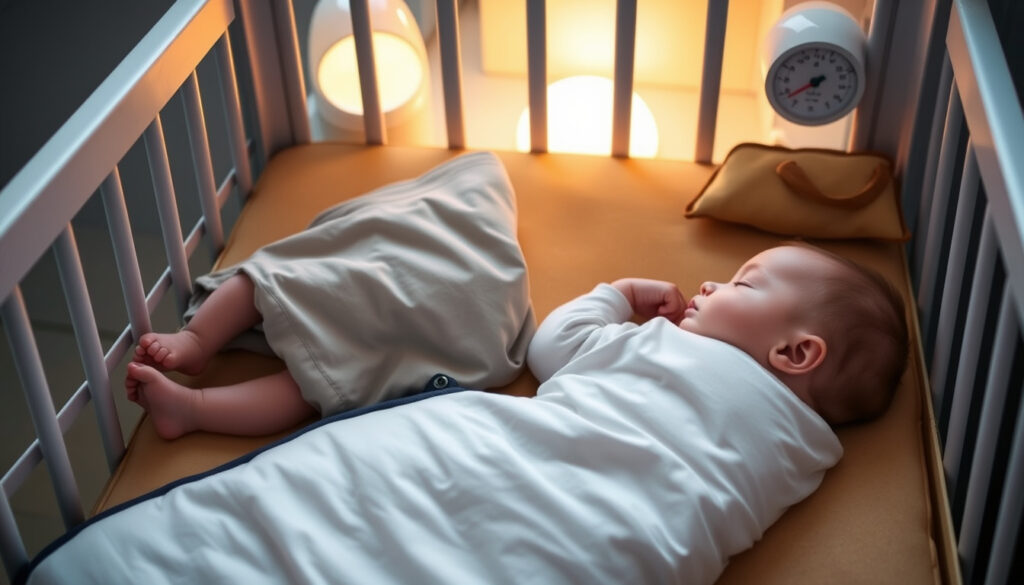
2.5 Tog Sleeping Bag Temperature Guide: Safe Sleep for Babies
Every parent has stood over a sleeping baby, wondering if that little chest is breathing a bit too fast or if the back of the neck feels sweaty. Getting the room temperature right with a 2.5 tog sleeping bag can reduce those worries—but only if you know the correct temperature range, the right layers underneath, and the signs of overheating.
Recommended room temperature range: 16–20°C (61–68°F) ·
Common age range: 0–24 months (size-dependent) ·
Primary fabric: Cotton, bamboo, or polyester blends ·
TOG rating use case: All-season / moderate climates ·
Safety certification: Meets BS 8510:2009 (European safety standard)
Quick snapshot
- 2.5 tog bags are designed for 16–20°C (Love to Dream US, baby sleep brand)
- Overheating increases SIDS risk (The Lullaby Trust, UK safe sleep charity)
- SIDS peaks at 2–4 months (Red Nose Australia, SIDS prevention organisation)
- Exact temperature boundaries vary by brand and baby’s individual metabolism
- Precise effect of different bedding materials on temperature regulation
- The interaction between room humidity and sleeping bag fabric on baby’s thermal comfort is not well-documented
- SIDS risk peaks between 2 and 4 months of age (The Lullaby Trust)
- Safe sleep practices should start from birth (Red Nose Australia)
- Above 20°C → switch to 1.0 or 0.5 tog bag (The Lullaby Trust)
- Below 16°C → consider 3.5 tog or extra layer (The Lullaby Trust)
- Use a room thermometer for accuracy (The Lullaby Trust)
A 2.5 tog sleeping bag sits in the middle of the insulation scale—warm enough for cool rooms but not as heavy as a 3.5 tog winter bag. Five key specs define how it fits into a safe sleep routine.
| Specification | Value |
|---|---|
| TOG rating | 2.5 |
| Recommended room temperature | 16–20°C (61–68°F) |
| Common age range | 0–24 months (size-dependent) |
| Material | Cotton, bamboo, or polyester blends |
| Safety standard | BS 8510:2009 |
What temperature is a 2.5 tog sleeping bag?
What is the recommended room temperature for a 2.5 tog bag?
Multiple manufacturers converge on the same band: a 2.5 tog sleeping bag is intended for nursery temperatures between 16°C and 20°C (61–68°F). Love to Dream, baby sleep brand places 2.5 TOG in that range, just below its 3.5 TOG option. Halo Sleep, baby sleep product manufacturer gives the same guidance: 2.5–3.5 TOG for 16–20°C. Kyte Baby, baby sleepwear brand says 2.5 TOG is intended for winter nights in that temperature window.
Why this matters: a 2.5 tog bag is not a one-size-fits-all solution. Use it only when the nursery thermometer reads 16–20°C. Outside that range, your baby risks overheating or getting cold.
A room thermometer is your best friend. The Lullaby Trust (UK safe sleep charity) recommends using one because room temperature is hard to judge by feel alone (The Lullaby Trust safe sleep page).
How to measure nursery temperature accurately
- Place the thermometer away from direct sunlight, radiators, and draughts
- Check at baby’s sleeping height, not on the wall
- Take a reading before each sleep period
The Lullaby Trust advises parents to use a room thermometer because “room temperature is difficult to judge by feel alone” (The Lullaby Trust). A quick check removes guesswork.
The implication: a £10 digital thermometer is a small investment compared to the peace of mind that comes from knowing your baby’s room is in the safe zone.
This consistent approach to monitoring eliminates temperature guesswork and creates a safer sleep environment.
Is 2.5 tog too hot for 22 degrees?
What to do if room temperature exceeds 22°C
Yes—at 22°C (72°F), a 2.5 tog bag is likely too warm. Momcozy, baby sleep product brand places 2.5 TOG in the 61–68°F (16–20°C) range, and that ceiling is firm. When the room rises above 20°C, switch to a 1.0 or 0.5 tog bag. The Lullaby Trust warns that overheating is a known risk factor for SIDS (The Lullaby Trust).
If the room hits 22°C and your baby is already in a 2.5 tog bag, remove it immediately and swap to a lighter option. Don’t wait for visible signs of overheating—prevent them.
Signs of overheating in babies
- Flushed, red skin
- Rapid breathing
- Sweating (especially on the back or neck)
- Restlessness or unusual fussiness
- Wet hair or damp clothing
Check your baby’s chest or the back of the neck. The Lullaby Trust says if the skin is hot or sweaty, they are too hot and layers should be removed (The Lullaby Trust). If they feel cold, add a layer or choose a higher tog bag.
The trade-off: a cooler room reduces SIDS risk but makes layering more important. You can always add a blanket over the clothes underneath the sleep sack—but never on top of the sack itself (The Lullaby Trust).
When should a baby wear a 2.5 tog sleeping bag?
Age and weight guidelines for 2.5 tog bags
Most 2.5 tog bags come in sizes covering birth to 24 months, but weight is more important than age. Common size brackets are 0–6 months, 6–18 months, and 18–36 months. Check the manufacturer’s weight limits—a bag that’s too large can ride up over the face, creating a suffocation risk. Red Nose Australia, SIDS prevention organisation stresses that safe sleeping bags should have fitted neck and armholes, no hood, and be correctly sized.
Seasonal use of 2.5 tog sleeping bags
In moderate climates, a 2.5 tog bag works year-round. In winter, pair it with a long-sleeved onesie under the bag. In summer, a short-sleeved bodysuit is enough. The rule of thumb: dress your baby in one more layer than an adult would wear comfortably in the same room (The Lullaby Trust).
The pattern: 2.5 tog is the Goldilocks option—not too hot, not too cold—but only when the room temperature is on target. When it’s warmer or colder, you adjust with layers or a different tog.
Can a baby overheat in a 2.5 tog bag?
How to prevent overheating in a sleep sack
Yes, overheating is possible if the room is too warm or the baby is overdressed underneath. The American Academy of Pediatrics (AAP, leading pediatric body) recommends keeping the nursery at a cool, comfortable temperature and avoiding loose blankets (AAP safe sleep guidelines). To prevent overheating:
- Keep the room between 16–20°C
- Use lightweight clothing under the bag
- Check the baby’s chest or back of neck before adding or removing layers
- Never cover the baby’s head with the sleep sack
The Lullaby Trust says parents should follow the manufacturer’s tog guide when selecting a sleeping bag for the room temperature (The Lullaby Trust). That means ignoring marketing phrases like “all-season” and reading the fine print.
What to wear under a 2.5 tog bag
A simple principle: one more layer than an adult would wear. If you’re comfortable in a short-sleeved shirt, your baby needs a long-sleeved onesie under the bag. If you’re in a long-sleeved top, your baby may need a short-sleeved onesie or just a nappy. The Lullaby Trust advises checking the baby’s chest or the back of the neck to judge—not hands or feet, which are typically cooler (The Lullaby Trust).
The implication: overheating is easier to prevent than to treat. A quick neck check before sleep, a thermometer reading, and a lightweight layer under the bag are all it takes to keep your baby safe.
What is the best temperature for SIDS?
Safe sleep temperature range for SIDS prevention
A cool room temperature of 16–20°C is recommended to reduce SIDS risk. The Lullaby Trust explicitly states: “We recommend a room temperature of 16–20°C for babies so they do not get too hot” (The Lullaby Trust). Overheating is a known risk factor—the exact mechanism isn’t fully understood, but epidemiological data links high ambient temperature and excessive bedding to higher SIDS incidence. If you’re concerned about your baby’s comfort and safety, it’s also helpful to know як позбутися від запору. як позбутися від запору
SIDS risk factors and peaks
SIDS incidence peaks between 2 and 4 months of age. Red Nose Australia says safe sleep bags can be used from birth and help reduce the risk of SUDI (Sudden Unexpected Death in Infancy), which includes SIDS. The exact reasons for the 2–4 month peak are still being studied, but the leading hypothesis involves a combination of immature cardiorespiratory control and external stressors like overheating.
What this means: safe sleep practices—including using the correct tog bag for the room temperature—should start from birth and continue through the first year. The 2–4 month window is not a reason to panic but a reminder to be diligent.
Confirmed facts and what remains unclear
Confirmed facts
- 2.5 tog bags are intended for room temperatures 16–20°C (Love to Dream US, Halo Sleep, Kyte Baby, Momcozy)
- Overheating increases SIDS risk (The Lullaby Trust)
- SIDS peaks at 2–4 months of age (Red Nose Australia)
- Use a room thermometer rather than relying on feel (The Lullaby Trust)
What remains unclear
- Exact temperature boundaries vary by brand and baby’s individual metabolism
- The precise effect of different bedding materials (cotton vs bamboo vs polyester) on core temperature regulation hasn’t been independently studied
- The optimal layering combination for different TOG ratings lacks consensus among experts
- The interaction between room humidity and sleeping bag fabric on baby’s thermal comfort is not well-documented
These uncertainties highlight the importance of individualized monitoring: what works for one baby may not work for another.
What the experts say
“Use a room thermometer because room temperature is difficult to judge by feel alone. Check your baby’s chest or the back of the neck to see if they are too hot or too cold.”
The Lullaby Trust (UK safe sleep charity) – Lullaby Trust safe sleep advice
“Keeping the room at a cool, comfortable temperature reduces the risk of Sudden Infant Death Syndrome. Avoid loose bedding, soft objects, and overheating.”
American Academy of Pediatrics (AAP, leading pediatric body) – AAP safe sleep guidelines
“Safe sleeping bags should have fitted neck and armholes, no hood, be correctly sized, and be appropriate for room temperature.”
Red Nose Australia (SIDS prevention organisation) – Red Nose Australia safe sleep page
These expert endorsements reinforce that following temperature guidelines and proper layering is not optional—it’s essential for infant safety.
For parents using a 2.5 tog sleeping bag, the choice is clear: keep the nursery at 16–20°C, dress your baby in one layer more than you’d wear, and check the back of the neck for warmth—not the hands. Overheat or underdress, and you’re either pushing toward a SIDS risk factor or waking a cold baby. Parents: a £10 thermometer and a quick neck check cost nothing; guessing wrong carries far higher consequences.
Frequently asked questions
Can I use a 2.5 tog sleeping bag for a 1-month-old?
Yes, as long as the bag is sized for the baby’s weight (often 0–6 months) and fitted properly—neck and armholes should be snug, not loose. Always place the baby on their back with the head uncovered (The Lullaby Trust).
What should my baby wear under a 2.5 tog sleeping bag?
A long-sleeved bodysuit or onesie in winter, or a short-sleeved bodysuit in summer. The rule: one more layer than an adult would find comfortable in the same room (The Lullaby Trust).
How often should I wash a 2.5 tog sleeping bag?
Follow the manufacturer’s care label—most recommend machine washing at 30–40°C every few days or when soiled. Ensure it’s fully dry before reuse to prevent mould growth.
Is it safe to use a 2.5 tog bag with a blanket?
No. The Lullaby Trust advises against adding extra blankets on top of a baby sleeping bag (The Lullaby Trust). The bag itself is the blanket—layering a loose blanket on top increases suffocation risk.
What is the difference between a sleep sack and a swaddle?
A sleep sack is a wearable blanket that leaves the arms free. A swaddle wraps the arms snugly to prevent the startle reflex. Sleep sacks are used from birth onward; swaddles are typically used only for the first few months until the baby starts rolling.
How to check if baby is too warm in a sleeping bag?
Feel the baby’s chest or the back of the neck. If it’s hot or sweaty, remove a layer or switch to a lighter bag. Never judge by hands or feet, which are naturally cooler (The Lullaby Trust).
Can I use a 2.5 tog sleeping bag for travel?
Yes—it’s portable and keeps the baby’s familiar sleep environment. Just ensure the nursery temperature at your destination is within 16–20°C. Pack a room thermometer to check.
These answers cover the most common concerns; always defer to your pediatrician if in doubt.
More related posts
 How Big Is A3 – Dimensions in mm, Inches, Comparisons
 How Long Does It Take for Antibiotics to Work? Signs & Timeline
 YouTube Premium Cost UK: £12.99, Lite £7.99 & Annual £129.99
 What Is a GPU – Complete Beginner’s Guide
 Race Across the World Experience: Worth It? Cost & How It Works
 Cast of Hostage (TV Series) – Full Cast, Characters & Updates
 Euros to Pounds Calculator – Live Rates and Comparisons
 BMW 3 Series for Sale in Ireland: 2025 Guide
