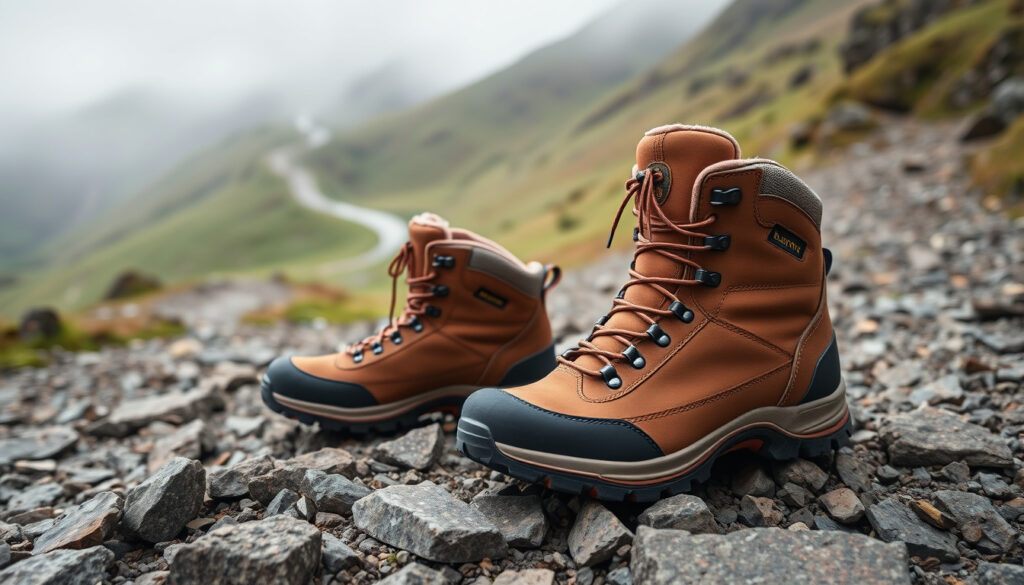
Hiking Boots: Are They Good for Walking? UK Buying Guide
You know the UK pattern: one dry week, then a fortnight of drizzle, mud and the kind of puddles that seem to appear overnight. If you’re shopping for boots, you probably want one thing above all—waterproofing that actually works. The good news? GORE-TEX, the company behind many waterproof membranes, says the secret sits less in a single material and more in how you choose, wear and maintain the boot.
Average price range: $100–$300 · Typical weight: 1.2–1.8 kg per pair · Most common membrane: GORE-TEX · Average lifespan: 500–1000 miles · Ankle support: ~70% of long-distance hikers choose mid/high boots
Key Facts at a Glance
If you are buying online without trying boots on, these are the numbers worth carrying in your head.
| Spec | Typical figure |
|---|---|
| Average price range for quality hiking boots | $100–$300 |
| Typical weight per pair, mid-cut leather | 1.2–1.8 kg |
| Most common waterproof membrane | GORE-TEX |
| Average lifespan with regular use | 500–1000 miles |
| Proportion of long-distance hikers choosing mid/high boots | Around 70% |
| Care cycle before the next walk | About 24 hours |
Is It Okay to Wear Hiking Boots for Walking?
Yes—and for most day hikes, that’s exactly what they are for. Hiking boots are typically mid-cut, which means the ankle collar rises above the joint and gives you extra support on uneven ground.
As GORE-TEX’s hiking-shoe guide explains, the best answer depends on the type of walking you actually do.
- Hiking boots provide excellent ankle support and weather protection for day walks on mixed terrain.
- They can feel heavy and hot for casual strolls on flat, hard paths.
- Choose based on walking distance, surface and how much weight you want on your feet.
Hiking Boots vs Walking Shoes: What’s the Difference?
When you line up a beefy boot and a flexible shoe, the pattern is mostly about trade-offs rather than one being “wrong”.
| Feature | Hiking boots | Walking shoes |
|---|---|---|
| Ideal surface | Rocky paths, mud, wet grass | Towpaths, pavements, dry trails |
| Ankle support | Higher collar covers the ankle | Low collar, more freedom |
| Weight | Heavier | Lighter |
| Waterproofing | Membrane plus treated upper | Often showerproof only |
| Break-in | Can take time | Usually minimal |
That’s why the choice should follow the final trail, not just the marketing label.
What Makes a Boot Waterproof in UK Weather?
A waterproof boot is really a system: a water-repellent finish, a sealed construction and, in many cases, a GORE-TEX membrane laminated to the upper.
- The outer fabric is treated with a Durable Water Repellent finish so water beads and rolls off.
- When that finish is fresh, rain hits the surface and runs off instead of soaking in.
- When the finish weakens, the upper soaks through—which is why GORE-TEX’s footwear-care guide says to refresh the treatment as soon as the outer material looks soaked.
Waterproofing Specs to Check Before You Buy
Most quality boots share a similar family of specs; the details decide whether they work for your sort of walking.
| Spec | Why it matters |
|---|---|
| Waterproof membrane | Helps keep feet dry without turning the boot into a plastic bag. |
| Water-repellent outer treatment | Stops the upper from soaking through too quickly. |
| Outsole rubber | Vibram and similar compounds give grip on wet rock and mud. |
| Mid-cut ankle coverage | Reduces the feeling of your ankle wobbling on uneven ground. |
| Breathability | More breathable boots feel less clammy when you’re moving. |
| Care cycle | About 24 hours to dry and refresh before the next walk. |
Specs are a good pre-screen, but the final decision will come down to how the boot feels on your foot.
How Should Hiking Boots Fit Before You Buy?
Fit is the part of the boot nobody can read from a spec sheet. The old rules still apply:
- Wear the same socks you plan to hike in.
- Leave a thumb’s width between your longest toe and the front of the boot.
- Make sure the heel stays locked when you walk uphill.
- Expect a little initial stiffness, but not a painful break-in.
How Do You Clean and Care for Waterproof Hiking Boots?
Most waterproof failures are not caused by a failed membrane; they are caused by neglect of the outer fabric. GORE-TEX’s care guidance is refreshingly practical.
- Remove the laces and insoles.
- Brush off loose dirt and mud.
- Wash with warm water and a soft brush, using cold or lukewarm water to rinse.
- Air dry at room temperature away from radiators.
- Reapply a water-based DWR treatment when water no longer beads.
GORE-TEX support also warns against powder detergents because they can clog the membrane’s pores. And leave enough time: the full care cycle can take about 24 hours.
Pros and Cons of Waterproof Hiking Boots
Pros
- Ankle support and weather protection for wet, uneven ground.
- More grip for mud, rock and sticky UK hills.
Cons
- Heavier and warmer for casual walking.
- Need regular care to stay genuinely waterproof.
Confirmed Facts: What We Actually Know
Some boot claims stay vague, but these are the concrete manufacturer instructions you can rely on.
Cleaning
Wash after every hike with a soft brush and cold or lukewarm water, according to GORE-TEX’s footwear-care guide.
Waterproofing
Refresh the water-repellent treatment as soon as the outer material soaks through, not after the boot has been through a whole winter of puddles.
Detergents
Powder detergents can clog membrane pores, so stick to soft-brush cleaning and water-based products.
Drying time
Give boots about 24 hours to complete the care cycle before wearing them again.
What the Manufacturer Says
“A good pair of outdoor shoes should feel comfortable and have enough room for your toes—after all, your feet carry you all day.”
— GORE-TEX’s hiking-shoe guide
“Wash your footwear after every hike and refresh the DWR treatment as soon as the outer material is soaked through.”
— GORE-TEX’s footwear-care guide
“It is best to wait for a dry day to clean and treat boots so they can dry outside.”
— The Great Outdoors gear guide
The Bottom Line
Boots are not a moral test. The best waterproof hiking boot is the one that fits, gives you the grip you need, and is ready to be cleaned after a wet week. Choose the boot you will actually lace up again.
outdoorsmagic.com, ukpicks.co.uk, ultralighthike.com, hatmatic.co.uk, coastandfell.co.uk, ultralighthike.com, fieldworthy.co.uk, gore-tex.com, theguardian.com
Frequently Asked Questions
Are hiking boots good for everyday walking?
Yes, when your walk includes uneven, muddy or wet ground. They provide ankle support and weather protection, though they can feel heavy and warm on hard flat paths.
Can I wear waterproof hiking boots on pavement?
You can, but walking shoes or light boots are usually easier on hard surfaces because they are lighter and more flexible.
How do I make my hiking boots waterproof again?
Clean the boots, let them dry, then apply a water-based DWR treatment. GORE-TEX says to refresh the treatment as soon as the outer material soaks through.
How long do waterproof hiking boots last?
Expect around 500 to 1000 miles of walking, depending on conditions and care.
How do I dry hiking boots without ruining them?
Dry them naturally at room temperature, away from radiators. Give the care cycle about 24 hours before wearing them again.
Related Reading
If you want the original manufacturer guidance before you buy, start with the GORE-TEX care guide and the GORE-TEX hiking-shoe guide.
More related posts
 How Long Does It Take for Mounjaro to Work? Full Timeline
 Hamburger SV vs Bayern – 2-2 Draw Result and Key Moments
 How Big Is A3 – Dimensions in mm, Inches, Comparisons
 2.5 Tog Sleeping Bag Temperature Guide: Safe Sleep for Babies
 40 Inches in CM: 101.6 cm TV, Waist Converter Guide
 Best Camping Gear Checklist – Top 5 Essentials and PDFs
 Leicester City vs Brentford – Score, Stats, Lineups and Analysis
 Cast of Juror No. 2 – Full List, Roles and Key Facts
