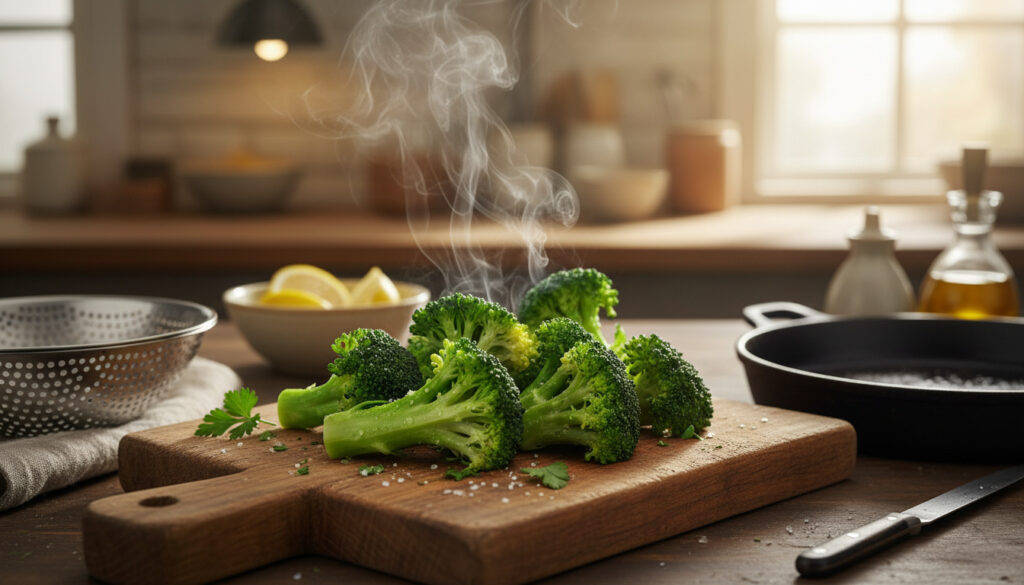
How to Cook Broccoli – 6 Ways for Crisp-Tender Results
Broccoli serves as a nutritional cornerstone in kitchens worldwide, yet achieving the optimal texture—bright green florets with a crisp-tender bite—requires precise technique. Overcooking transforms this cruciferous vegetable into a mushy, sulfurous disappointment, while undercooking leaves stalks woody and unpalatable.
Multiple cooking methods yield distinct results. Microwaving offers speed, roasting develops caramelized depth, and steaming preserves water-soluble vitamins. Each technique demands specific timing and preparation protocols to maximize both nutritional value and sensory appeal.
This guide examines six evidence-based approaches to cooking broccoli, from rapid microwave steaming to high-heat roasting, with verified timings and safety considerations sourced from culinary testing and food safety standards.
Cooking Methods at a Glance
| Method | Time | Equipment | Best For |
|---|---|---|---|
| Microwave | 3-5 min | Microwave-safe bowl, cover | Speed |
| Steam | 3-5 min | Pot, steamer basket | Nutrient retention |
| Boil | 1-2 min | Large pot | Quick blanch |
| Roast | 15-25 min | Oven, sheet pan | Flavor development |
| Sauté | 6-8 min | 12-inch skillet | Stovetop ease |
Essential Preparation Insights
- Cut florets into uniform sizes to ensure even cooking
- Select fresh broccoli with tight, non-yellowing florets
- High-smoke-point oils such as avocado or grapeseed prevent burning during high-heat methods
- Bright green color indicates optimal doneness; dull olive signals overcooking
- Crisp-tender texture—pierceable but not mushy—represents the ideal endpoint
- Ice water baths halt cooking immediately for meal prep
- Single-layer arrangement in pans prevents steaming instead of browning
Detailed Texture Comparison
| Method | Time (Florets) | Texture | Best For |
|---|---|---|---|
| Steam | 3-5 min | Crisp-tender | Nutrients |
| Boil | 1-2 min | Tender | Quick blanch |
Microwave Cooking Details
Microwave cooking utilizes internal steam generation to cook florets rapidly. Place broccoli in a microwave-safe bowl with approximately two tablespoons of water. Cover tightly with plastic wrap or a plate to trap steam. Microwave on high for three minutes, then check for doneness. If florets resist a fork, continue heating in one-minute increments until bright green and crisp-tender. Research indicates that microwave steaming preserves nutrients comparably to conventional methods when cooking times remain brief.
Step-by-Step Cooking Timeline
Proper cooking technique follows a precise sequence. Begin by selecting fresh heads with firm stalks and compact florets. Wash thoroughly under cold running water to remove field debris. Trim the main stem and cut florets into uniform two-inch pieces to ensure simultaneous doneness.
Prepare your equipment according to the chosen method. For microwave cooking, arrange florets in a single layer with water added. For roasting, preheat the oven to 425°F and toss with heart-healthy oils. Steam or boil water before adding broccoli to reduce total cooking time.
Cook until florets reach the bright green stage—typically between one and five minutes depending on heat intensity. Immediately transfer to an ice bath if not serving hot. Drain thoroughly before seasoning to prevent dilution of flavors.
Clarity on Doneness Indicators
Visual and textural cues provide the most reliable indicators of properly cooked broccoli. The color transition from deep forest green to bright emerald signals that chlorophyll has stabilized without degrading into the dull olive-gray associated with overcooking. This color change typically coincides with the breakdown of cell wall pectin, creating the desired tender-but-resilient texture.
A properly cooked floret offers slight resistance when pierced with a fork or toothpick, similar to al dente pasta. Complete softness indicates overcooking and often correlates with the release of sulfurous compounds responsible for the characteristic odor. Nutritional analyses demonstrate that brief cooking preserves vitamin C and folate better than extended heat exposure.
Method Analysis and Selection
Selecting the appropriate cooking technique depends on balancing time constraints, nutritional priorities, and flavor preferences. Steaming preserves the highest concentration of water-soluble vitamins, particularly vitamin C and folate, which leach into boiling water during blanching. The gentle heat of steam also maintains structural integrity better than aggressive boiling.
Roasting at high temperatures triggers the Maillard reaction, creating complex savory compounds and caramelized edges that complement the vegetable’s natural bitterness. This method sacrifices some vitamin retention for flavor development, making it ideal for palates resistant to plain steamed vegetables. Sautéing offers a middle ground, combining moderate heat exposure with the ability to add aromatic ingredients like garlic or ginger.
Microwave steaming provides the fastest results while retaining nutrients comparable to conventional steaming, provided the cook time remains under five minutes. Boiling serves best for blanching prior to freezing or when preparing cream soups where texture uniformity matters more than bite resistance.
Summary
Mastering broccoli preparation requires attention to timing and heat application. Whether seeking the convenience of microwave steaming or the complex flavors of roasting, maintaining bright green color and crisp-tender texture indicates success. Uniform cutting ensures even cooking, while immediate cooling preserves texture for meal preparation. These methods accommodate various dietary needs and time constraints while maximizing the vegetable’s substantial nutritional profile. For a delicious broccoli and ground meat dish, consider learning Як приготувати картопляне пюре з фаршем. Як приготувати картопляне пюре з фаршем
Frequently Asked Questions
How long should I microwave broccoli?
Microwave broccoli on high for three minutes initially, then check for doneness. Continue heating in one-minute increments until florets are bright green and offer slight resistance when pierced with a fork. Total time typically ranges from three to five minutes depending on portion size and microwave wattage.
Which cooking method preserves the most nutrients?
Steaming preserves the highest levels of water-soluble vitamins including vitamin C and folate. Microwaving with minimal water provides similar nutritional retention in less time. Boiling causes the greatest nutrient loss as vitamins leach into cooking water.
How can I tell if broccoli is overcooked?
Overcooked broccoli displays a dull olive-gray color instead of bright green and offers no resistance when pierced. The texture becomes mushy, and the vegetable may emit sulfurous odors resembling overcooked cabbage.
Is it necessary to blanch broccoli before roasting?
No, blanching is unnecessary before roasting. Raw florets roasted at high temperatures develop superior caramelization and texture. However, cutting uniform sizes ensures even cooking without preliminary blanching.
More related posts
 Anna Wintour Bill Nighy – Truth Behind the Rumors
 When Did WW2 End? Europe and Pacific Dates Explained
 A Seal Pushed Me Yesterday in French – Viral Meme Explained
 Tax a Car Online – Official DVLA Step-by-Step Guide
 Ministry of Ungentlemanly Warfare: True Story & Box Office
 Sinéad O’Connor Nothing Compares 2 U – Lyrics, Meaning & History
 A Man Called Otto – Cast, Streaming, Reviews Guide
 Morgan Gibbs-White Stats – 24/25 Goals, Assists, FPL Data
