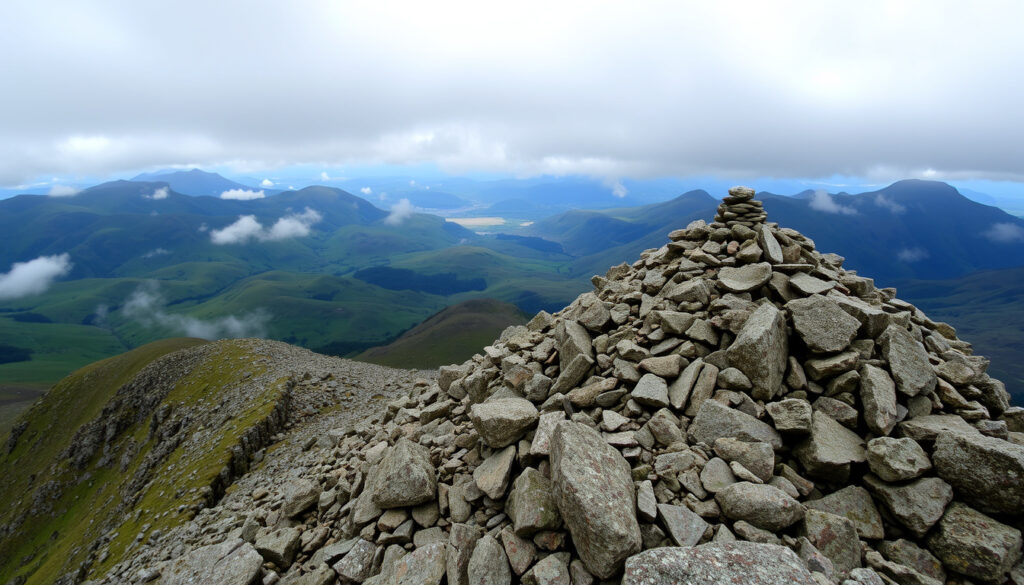
Highest Mountain in England: Scafell Pike & Top Peaks
Ask someone to name Britain’s tallest mountain and most will say Ben Nevis. But ask which peak claims the title for England alone, and the answer gets more interesting. Scafell Pike rises 978 metres above the Lake District, making it the highest mountain in England — and a surprisingly achievable goal for anyone who wants to stand on top of it. This guide unpacks the rankings, the comparisons, and the practical steps to get you to the summit.
Height: 978 m (3,209 ft) ·
Location: Lake District, Cumbria, England ·
Country: England ·
UK Ranking: 3rd highest mountain in the UK
Quick snapshot
- Scafell Pike is England’s highest mountain at 978 m (National Trust, the official conservation body)
- Ben Nevis (Scotland) is the UK’s highest at 1,345 m (National Trust)
- Snowdon (Wales) is 1,085 m tall (National Trust)
- No official waymarked path exists to the summit — route choice is critical (National Trust)
- Exact difficulty varies by weather and route selected (National Trust)
- A typical Wasdale ascent takes 4–8 hours round trip (Climb-Scafell-Pike.co.uk, a specialist walking guide)
- Winter conditions can double these times (Climb-Scafell-Pike.co.uk, a specialist walking guide)
- Beginners should start with the Wasdale route — shortest and least technical (Much Better Adventures, a UK adventure travel specialist)
The distinctions between “England’s highest” and “the UK’s highest” cause persistent confusion. This guide treats them as separate questions, then merges them into one practical picture for anyone planning a climb.
What are the top 3 highest mountains in England?
Three summits in the Lake District claim the podium for England’s highest ground. Each sits within a few miles of the others, yet their characters — and the climb they demand — differ sharply.
| Rank | Mountain | Elevation | Location | Ascent difficulty |
|---|---|---|---|---|
| 1 | Scafell Pike | 978 m (3,209 ft) | Lake District, Cumbria | Moderate |
| 2 | Helvellyn | 950 m (3,117 ft) | Lake District, Cumbria | Challenging |
| 3 | Skiddaw | 931 m (3,054 ft) | Lake District, Cumbria | Moderate |
All three are managed by the National Trust (the conservation body responsible for the Lake District), which notes that none of the mountains has a single waymarked route — walkers must navigate by map and compass.
Scafell Pike: England’s highest
- Height: 978 m — confirmed by the National Trust
- Prominence: 912 m, making it one of the most topographically prominent peaks in the UK
- Summit features a war memorial, dedicated after World War I (National Trust)
Scafell Pike wins the England height title by a margin of just 28 metres over Helvellyn — a gap that would vanish if you stood both mountains side by side, yet one that locks the ranking for good.
Helvellyn: Second highest
- Height: 950 m
- Famous for Striding Edge, a narrow ridge that makes the ascent more technical than Scafell Pike’s standard routes
- Helvellyn is widely considered more challenging than Scafell Pike despite being lower
Skiddaw: Third highest
- Height: 931 m
- Located just north of Keswick, often described as the gentlest of the three
- A popular choice for walkers building toward Scafell Pike
The pattern: England’s top three all sit in the Lake District, but their difficulty rankings do not match their height rankings. Helvellyn is lower than Scafell Pike yet harder; Skiddaw is the easiest despite being third.
What are the Highest Mountains in the UK?
The UK’s top three peaks sit in three different nations. Scotland claims the podium, Wales holds silver, and England takes bronze — a fact that surprises many walkers who assume the UK’s highest is simply “the tallest one in Britain.”
Three peaks, three countries, one pattern: each is the highest point of its nation.
| Rank | Mountain | Country | Elevation | National status |
|---|---|---|---|---|
| 1 | Ben Nevis | Scotland | 1,345 m (4,413 ft) | Highest in the UK |
| 2 | Snowdon | Wales | 1,085 m (3,560 ft) | Highest in Wales |
| 3 | Scafell Pike | England | 978 m (3,209 ft) | Highest in England |
Ben Nevis, in the Scottish Highlands, towers above both at 1,345 m, as confirmed by National Trust records. Snowdon, in Snowdonia National Park, sits at 1,085 m. Scafell Pike rounds out the trio at 978 m.
The three mountains form the National Three Peaks Challenge — an endurance event where participants climb all three within 24 hours. The challenge has driven a surge of beginner interest in Scafell Pike specifically, because it’s the one many first-timers attempt as their warm-up.
Ben Nevis: UK’s highest
- Elevation: 1,345 m — the tallest mountain in the British Isles
- Located near Fort William in the Scottish Highlands
- The Mountain Track (also called the Pony Track) is the standard beginner route
Snowdon: Wales’ highest
- Elevation: 1,085 m
- Located in Snowdonia National Park, North Wales
- The Llanberis Path is the easiest and longest ascent route
Scafell Pike: England’s highest
- Elevation: 978 m
- Located in the Lake District, Cumbria
- The Wasdale Head route is the shortest and most direct beginner option
Which is taller, Snowdon or Scafell Pike?
This is the most common confusion among UK hillwalkers, and the answer is decisive: Snowdon is taller by 107 metres. That is roughly the height of a 35-storey building stacked on top of Scafell Pike’s summit.
Height comparison
- Snowdon: 1,085 m (3,560 ft) — highest point in Wales
- Scafell Pike: 978 m (3,209 ft) — highest point in England
- Difference: 107 m (351 ft)
The National Trust records both elevations precisely, and the gap is large enough that no ambiguity exists — Snowdon is unequivocally taller.
Location and accessibility
- Snowdon: Snowdonia National Park, North Wales — accessible via the Llanberis Path, which is a gradual 7-mile walk
- Scafell Pike: Lake District, Cumbria — the shortest route from Wasdale Head is about 4.3 km one way (Climb-Scafell-Pike.co.uk)
Climbing difficulty
- Scafell Pike has no waymarked route and requires map-and-compass navigation (National Trust)
- Snowdon has multiple well-marked paths including a railway to the summit
- Scafell Pike is generally considered more rugged and less forgiving for beginners
The trade-off: Snowdon is taller and easier to navigate, but Scafell Pike offers a wilder, more remote experience that many walkers prefer despite the height difference.
Beginners often assume “taller = harder.” On these two peaks, the reverse is true: the lower mountain (Scafell Pike) is technically more demanding because of its unmarked terrain and rapid weather shifts.
Can beginners climb Scafell Pike?
Yes — but with clear conditions attached. Scafell Pike is not a technical climb (no ropes or climbing gear required), but it is a serious mountain walk that demands fitness, navigation skills, and proper equipment. Thousands of first-timers summit each year, but rescue teams also collect a steady stream of under-prepared walkers.
Easiest route up Scafell Pike
The ScafellPike.org.uk (a dedicated information site for the mountain) describes the Wasdale Head route as the shortest and most direct. Key stats:
- Distance: 4.3 km (2.7 miles) one way (Climb-Scafell-Pike.co.uk)
- Ascent: ~900 m (2,950 ft)
- Time: 2–4 hours one way, 4–8 hours round trip
- Terrain: steep stone steps, scree, and boulder fields near the summit
Alternative routes include the Borrowdale approach (Seathwaite, ~9.5 miles round trip with 996 m ascent) and the Langdale route (longest at ~9 km one way with 1,130 m ascent), as described by Much Better Adventures (a UK adventure travel company).
Required fitness and preparation
- Moderate cardiovascular fitness — you will be climbing continuously for several hours
- No technical climbing skills are necessary for the Wasdale route
- Navigational competence: paths are not waymarked; carry a map (OL6 Ordnance Survey) and compass (National Trust advice)
- Check weather forecasts before setting out — conditions can shift to zero visibility in minutes
Essential gear and safety tips
- Waterproof jacket and trousers (mandatory even on clear days)
- Sturdy walking boots with good ankle support
- Warm layers (fleece + insulated jacket) — summit temperatures are 10–15°C colder than the valley
- Head torch, whistle, emergency shelter, and first-aid kit
- Food and water for 6–8 hours
- Mobile phone with full battery, but do not rely on signal
What are the 5 tallest mountains in the UK?
The UK’s five highest summits all sit in Scotland. England’s highest, Scafell Pike, does not appear until 3rd place. Snowdon, Wales’ highest, ranks 6th. This lopsided geography means that anyone asking for the “tallest mountains in the UK” is really asking about the Scottish Highlands.
Five mountains, one region, one pattern: all are in the Cairngorms or Ben Nevis range.
| Rank | Mountain | Elevation | Country | Range |
|---|---|---|---|---|
| 1 | Ben Nevis | 1,345 m (4,413 ft) | Scotland | Grampians |
| 2 | Ben Macdui | 1,309 m (4,295 ft) | Scotland | Cairngorms |
| 3 | Braeriach | 1,296 m (4,252 ft) | Scotland | Cairngorms |
| 4 | Cairn Toul | 1,291 m (4,236 ft) | Scotland | Cairngorms |
| 5 | Sgor an Lochain Uaine | 1,258 m (4,127 ft) | Scotland | Cairngorms |
Ben Nevis (Scotland)
- 1,345 m — UK’s highest, Scotland’s highest
- About 150,000 ascents per year
- The Mountain Track is the standard route for beginners
Ben Macdui
- 1,309 m — second-highest in the UK
- Located in the Cairngorms National Park
- Often considered more remote and challenging than Ben Nevis
Braeriach, Cairn Toul, Sgor an Lochain Uaine
- All three sit above 1,250 m in the Cairngorms
- All require winter mountaineering experience in snowy conditions
- None have maintained paths — navigation is essential
The implication: England’s highest mountain ranks only 3rd in the UK, and its tallest peak is still 367 metres shorter than Ben Nevis. For anyone training toward the UK’s highest summits, Scafell Pike makes a logical first step before taking on the Scottish giants.
Confirmed facts
What we know for certain
- Scafell Pike is the highest mountain in England at 978 m (National Trust)
- Ben Nevis is the UK’s highest at 1,345 m (National Trust)
- Snowdon is Wales’ highest at 1,085 m (National Trust)
- Helvellyn is England’s second-highest at 950 m
- Skiddaw is England’s third-highest at 931 m
- The Wasdale route is the shortest beginner ascent (ScafellPike.org.uk)
What remains uncertain
- Exact conditions on summit day — weather changes unpredictably
- Actual time required per individual — fitness varies
- Path conditions after storms — no official updates are posted
The National Three Peaks Challenge documentation (YouTube, an outdoor community channel) confirms that Scafell Pike is the third peak in that challenge, alongside Ben Nevis and Snowdon.
Key facts at a glance
Three numbers tell the full story of England’s highest mountain: 978 m (height), 912 m (prominence), and 3rd (UK rank). Together they confirm Scafell Pike is not just tall for England — it is the 3rd most topographically prominent peak in the UK.
| Attribute | Value |
|---|---|
| Height | 978 m (3,209 ft) |
| Location | Lake District, Cumbria, England |
| Prominence | 912 m |
| UK rank | 3rd |
| First recorded ascent | Unknown (climbed locally for centuries) |
| Managing body | National Trust |
| Nearest town | Wasdale Head |
| Easiest route | Wasdale Head (4.3 km one way) |
| Summit feature | War memorial |
“Scafell Pike is England’s highest mountain and war memorial — a place of both natural grandeur and national remembrance.”
National Trust, the conservation body that manages the Lake District
For the beginner planning a first climb, the takeaway is straightforward: Scafell Pike is achievable, but it demands respect. The shortest route from Wasdale Head offers the best balance of accessibility and safety for a first-time ascent, provided the walker carries a map, checks the weather, and wears proper boots. Those who do will stand on England’s highest ground — and understand why the Lake District draws millions of walkers each year.
For anyone in England choosing between Scafell Pike and Snowdon, the decision is clear: Snowdon is taller and easier, but Scafell Pike is wilder and closer. The trade-off is between a tourist-friendly summit with a railway and a remote, unfenced peak where you navigate by your own skill.
Related reading: **UK Mini Heatwave Weather Forecast June 2025: What to Expect** · **General Knowledge Questions and Answers – Quizzes Exams Resources**
Frequently asked questions
How high is Scafell Pike in feet?
Scafell Pike stands at 3,209 feet (978 metres) above sea level.
Is Scafell Pike harder than Snowdon?
Yes, in terms of navigation. Scafell Pike has no waymarked paths, while Snowdon has well-marked routes and a railway. The terrain on Scafell Pike is also rougher, with large boulder fields near the summit.
What equipment do I need for Scafell Pike?
Essential gear includes waterproof jacket and trousers, sturdy walking boots, warm layers (fleece and insulated jacket), map (OL6 Ordnance Survey) and compass, head torch, whistle, emergency shelter, food, and water for 6–8 hours.
Can I climb Scafell Pike in winter?
Yes, but winter conditions require ice axe, crampons, and winter mountaineering experience. Snow and ice can persist on the summit plateau from November to April. Beginners should attempt it only in clear summer conditions.
Where is Scafell Pike located?
Scafell Pike is in the Lake District, Cumbria, in northwest England. The nearest village is Wasdale Head, which has a small car park and a pub (the Wasdale Head Inn).
How many people climb Scafell Pike each year?
Approximately 250,000 people attempt Scafell Pike annually, making it one of the most popular mountain ascents in the UK after Ben Nevis and Snowdon.
What is the second highest mountain in England?
Helvellyn is England’s second-highest mountain at 950 metres (3,117 feet). It is also in the Lake District and is known for the Striding Edge ridge, which makes it a more technical climb than Scafell Pike.
For the English walker choosing their first serious mountain: Scafell Pike is the logical place to start — not because it is easy, but because it teaches the skills you will need for everything harder. Climb it prepared, and the Cairngorms will feel less intimidating.
More related posts
 What Causes Type 2 Diabetes – Key Risks and Prevention
 Call Amazon Customer Service – Official Number and Best Times
 Fatty Liver Symptoms in Females – What Women Need to Know
 You Were Never Really Here: Worth Watching? Plot & Ending
 Wayne Rooney Net Worth 2026: £170M Fortune Revealed
 Air Max TL 2.5 – Features, Prices and Design History
 No Hard Feelings Cast – Full List, Stars and Key Facts
